
Beating Mold in Older Conyers Homes When Georgia Hits the Upper 90s
Rockdale County heat pushes indoor humidity into the mold zone — here's exactly which Conyers homes are most at risk this summer and the five moves every homeowner should make before the next 97° week.
Beating Mold in Older Conyers Homes When Georgia Hits the Upper 90s
By the PropertyPro Concierge™ team, reporting from Rockdale County, GA
Ask any HVAC tech in Conyers what they've been running on all summer and you'll get the same answer: overtime. When the forecast for Rockdale County stacks up 95° to 99° highs day after day and the dew point sits in the mid-70s, the outside air is holding roughly twice the moisture it does in April. Every time your AC kicks off, or your kids leave the back door hanging open, some of that moisture rides straight into your home, and it looks for somewhere cool and dark to land.
That "somewhere" is almost always the same spot in an older Conyers home: a shaded north-facing wall, a crawlspace vent behind the azaleas, the back of a bedroom closet on the slab, or the corner where the original 1970s HVAC return meets the drywall. This is a Conyers-specific mold problem, and generic national advice does not solve it.

Why Rockdale County's summer heat actually grows mold, it doesn't kill it
There is a myth that Georgia's brutal summer heat "burns mold out." It does the opposite. Mold spores are dormant almost everywhere in Rockdale County soil, mulch, and pine straw. They need three things to bloom: a food source (drywall paper, wood, dust), a temperature between roughly 60°F and 90°F, and, the one you can actually control, surface humidity above about 60%.
When Conyers sits at 97°F outside with 75% relative humidity, your AC pulls the air temperature down to 74°F in the living room, but it doesn't necessarily pull the humidity down at the same rate. On an older, oversized system, very common in homes built between 1965 and 1995 along Highway 138, Salem Road, and Milstead, the AC short-cycles: it hits the thermostat setpoint in eight minutes, shuts off, and never runs long enough to actually dehumidify. Your indoor RH creeps to 62%, 65%, sometimes 70%. That is a mold buffet.
The three Conyers houses most at risk right now
After walking hundreds of Rockdale County homes with our providers, we see the same three profiles over and over during a hot summer stretch:
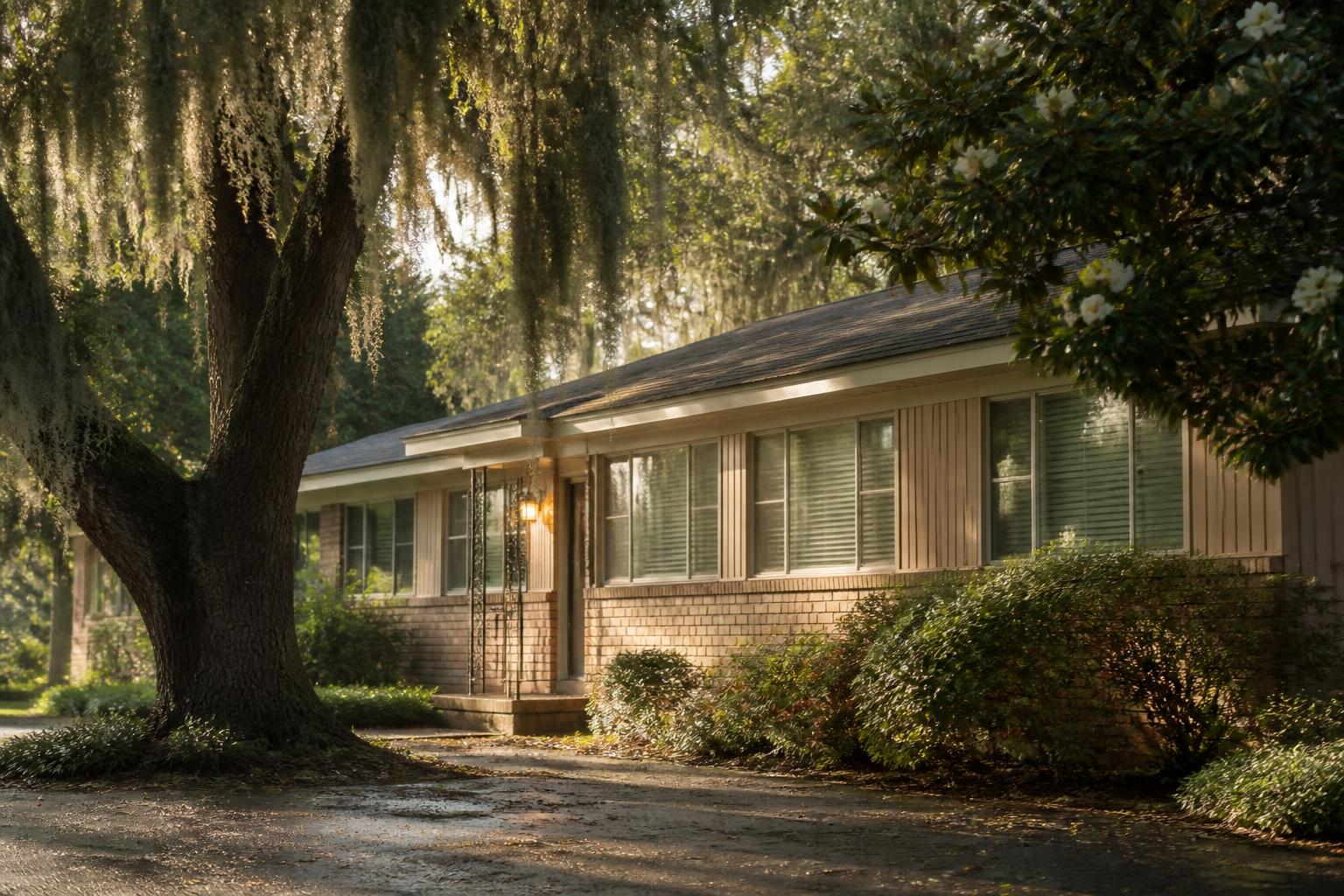
- 1970s–1980s ranches with original crawlspaces, think the neighborhoods off Sigman Road, Old Salem, and parts of Honey Creek. Vented crawlspaces pull in 97° saturated air, and that moisture condenses on the cool underside of your subfloor. You'll smell it in the master closet before you ever see it.
- Split-levels and two-stories with an oversized single-stage AC, the system cools fast, cycles off, and never removes latent moisture. Bathrooms without a working exhaust fan (or a fan vented into the attic instead of outside) push RH over 70% in minutes.
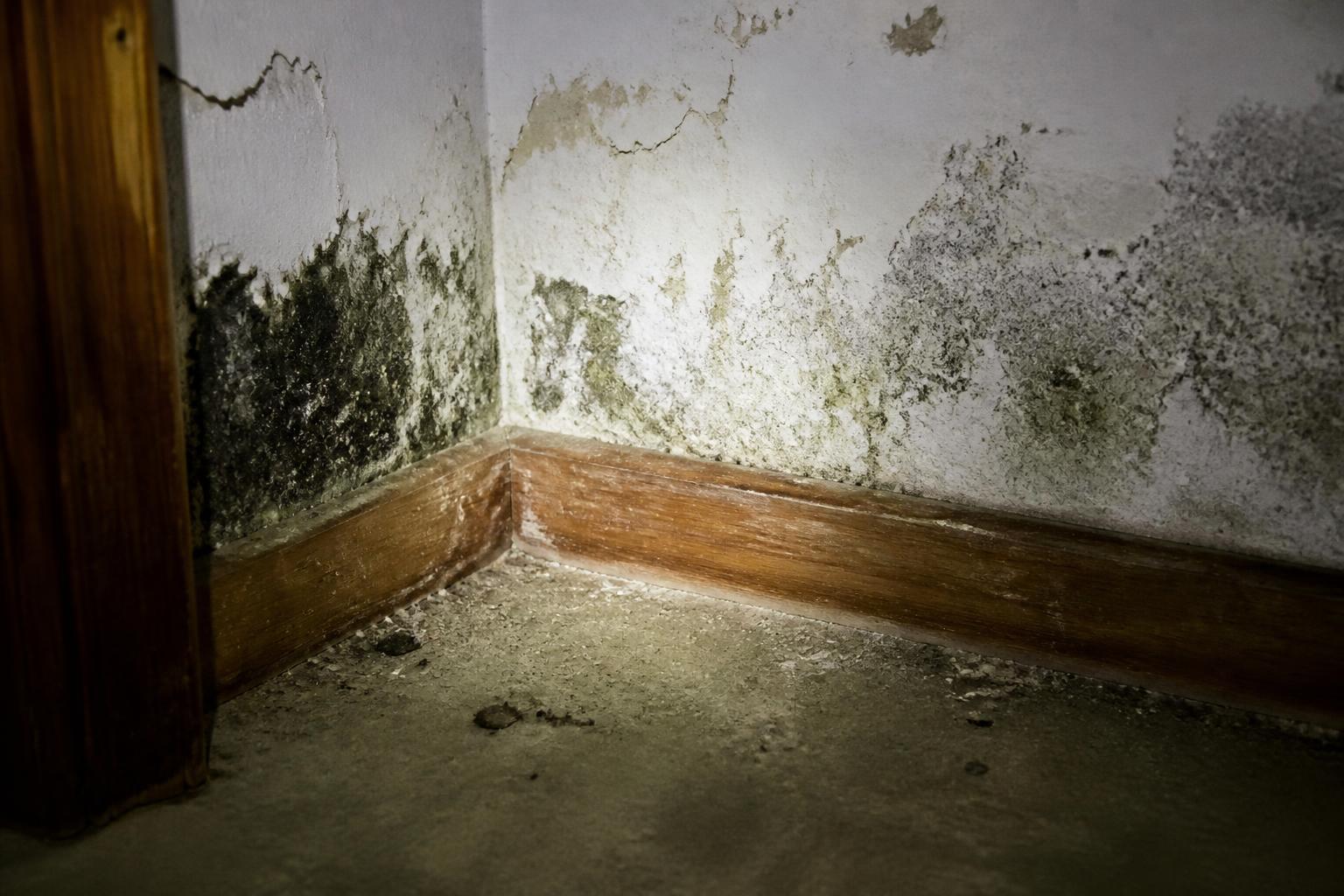
- Basements finished in the 1990s with vinyl or carpet on the slab, moisture wicks up through the concrete, gets trapped under the flooring, and feeds mold in the drywall behind the baseboard where you can't see it. This is the #1 hidden-mold case we route to remediation pros in Rockdale.
What "normal" mold in Conyers actually looks like
Most homeowners we help in Conyers didn't call us because they saw mold. They called because:
- The air in one bedroom smells faintly musty when the AC first kicks on, then fades
- A child's allergies or asthma get noticeably worse in July and August but improve on vacation
- There's a fuzzy discoloration on the drywall behind furniture pushed against an outside wall
- Rust or black speckling shows up on the AC vent covers in a specific room
- A soft or spongy spot appears in the subfloor near an exterior door or window
If any of those match your home right now, treat it as a signal, not a certainty. Cosmetic surface mold on a bathroom ceiling is not the same problem as saturated drywall behind a baseboard, and the fix is completely different. See our full Provider Standards for how we ask remediation pros to disclose licensing, insurance, and containment protocols before they walk your home.
The five things every Conyers homeowner should do before the next 97° week
You do not need a $10,000 remediation to hold the line during a Georgia heat wave. You need to control indoor humidity. In this order:
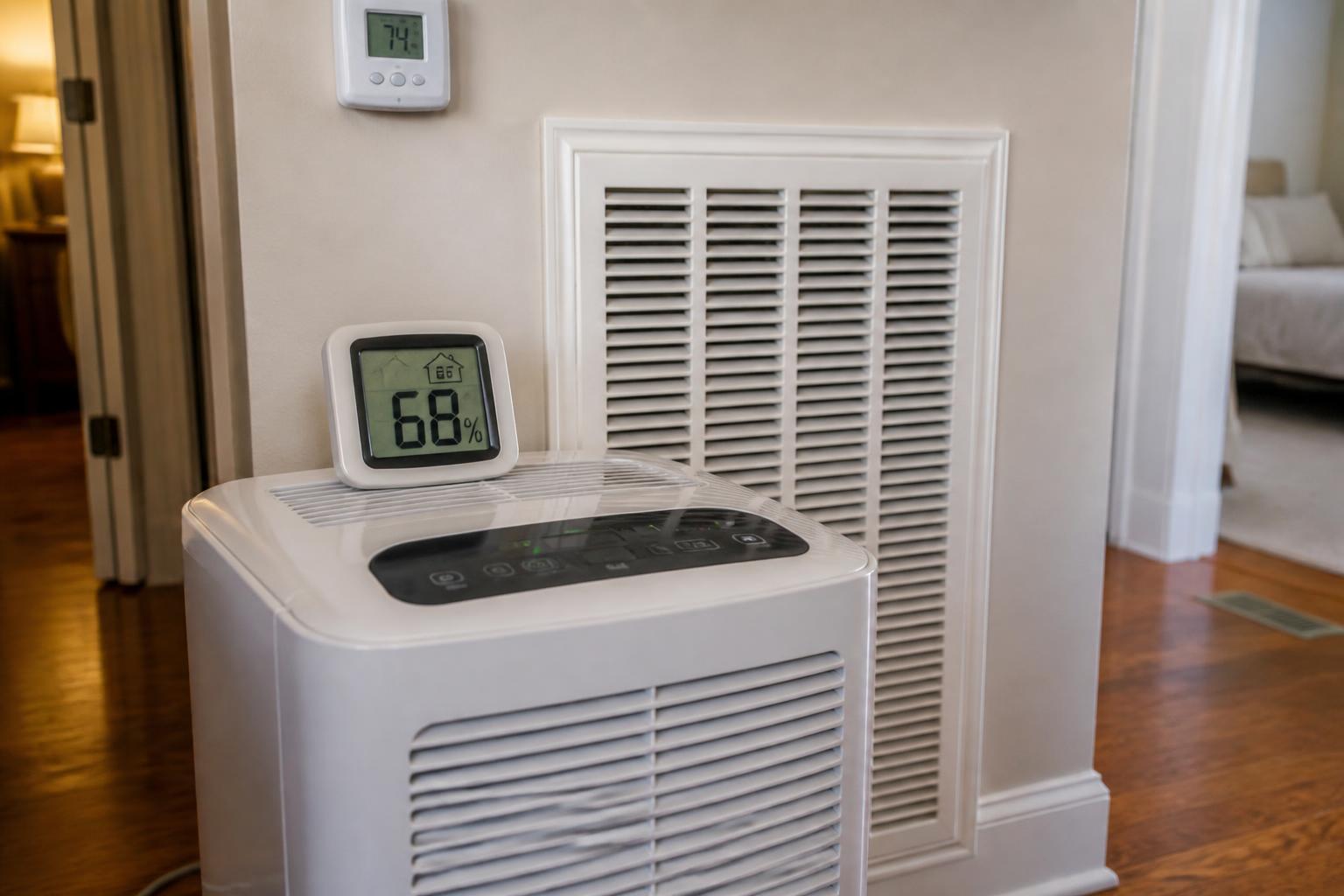
- Buy a $15 hygrometer and put it in your most-at-risk room. Master closet on a slab, finished basement, or the bedroom farthest from the AC handler. Your target is 45%–55% RH. Above 60% for more than a couple of days is when mold starts.
- Set your thermostat fan to AUTO, not ON. Running the fan continuously in Georgia summer re-evaporates moisture off the wet AC coil and pushes humid air back into the house. AUTO lets the moisture drain out the condensate line where it belongs.
- Run a standalone dehumidifier in any finished basement or slab-level room. A 50-pint unit costs about $250 and will pull 3–5 gallons of water a day out of the air in July and August in Rockdale County. This is the single highest-ROI thing you can do.
- Check every exhaust fan. Bathroom fans in older Conyers homes were often installed venting into the attic instead of outside, code was different, and shortcuts were common. If your fan blows into the attic, you are literally feeding your roof deck.
- Walk your crawlspace foundation vents. If they're overgrown with shrubs, pine straw, or leaves, air isn't moving and the crawlspace is sitting at 85% RH. Clear them, and consider talking to a pro about encapsulation if the space stays damp after two weeks of dry weather.
When to stop DIY and call a pro in Rockdale County
Bleach and a scrub brush handle a few square inches of surface mold on non-porous tile or a shower curtain. That's it. Call a licensed mold remediation pro if any of these are true:
- The affected area is larger than about 10 square feet (roughly a 3-foot by 3-foot patch)
- You can see mold on drywall, baseboards, insulation, or the underside of subfloor
- There is a known water source, a slow plumbing leak, a roof leak from a summer storm, or standing water in the crawlspace
- Anyone in the home has asthma, immunocompromise, or unexplained worsening allergy symptoms
- You are preparing to list the home for sale, refinance, or file an insurance claim
Real remediation in Conyers means containment (plastic barriers, negative air), HEPA filtration, removal of porous materials that cannot be cleaned, treatment of the underlying moisture source, and, this is the one homeowners forget, post-remediation verification so you have documentation the problem was actually solved.
How PropertyPro Concierge™ handles a Conyers mold call
You don't need to shop three companies, sit through three site visits, and try to compare three different scopes of work while you're sneezing. When you tell us you have a suspected mold problem in Rockdale County, our concierge team qualifies the situation, gathers the details a pro actually needs to quote accurately, and routes the job to one matched provider in your area. If you're in Conyers, Covington, Lithonia, or anywhere else in Rockdale County, we'll connect you to the closest available pro or let you know when a confirmed provider is willing to come to you.
If the concierge is closed or you'd rather start yourself, use Get Help and pick "Mold" as the category. Answer the four short questions honestly, square footage, visible vs. suspected, any known water source, and residential vs. commercial, and we'll take it from there.
Bottom line for Conyers homeowners: you can't change the Georgia weather, but you can absolutely control the two variables mold needs. Get indoor humidity under 55%, fix water sources fast, and don't wait until August to have the conversation. Rockdale County heat is here for another eight to ten weeks, your walls are keeping score.