
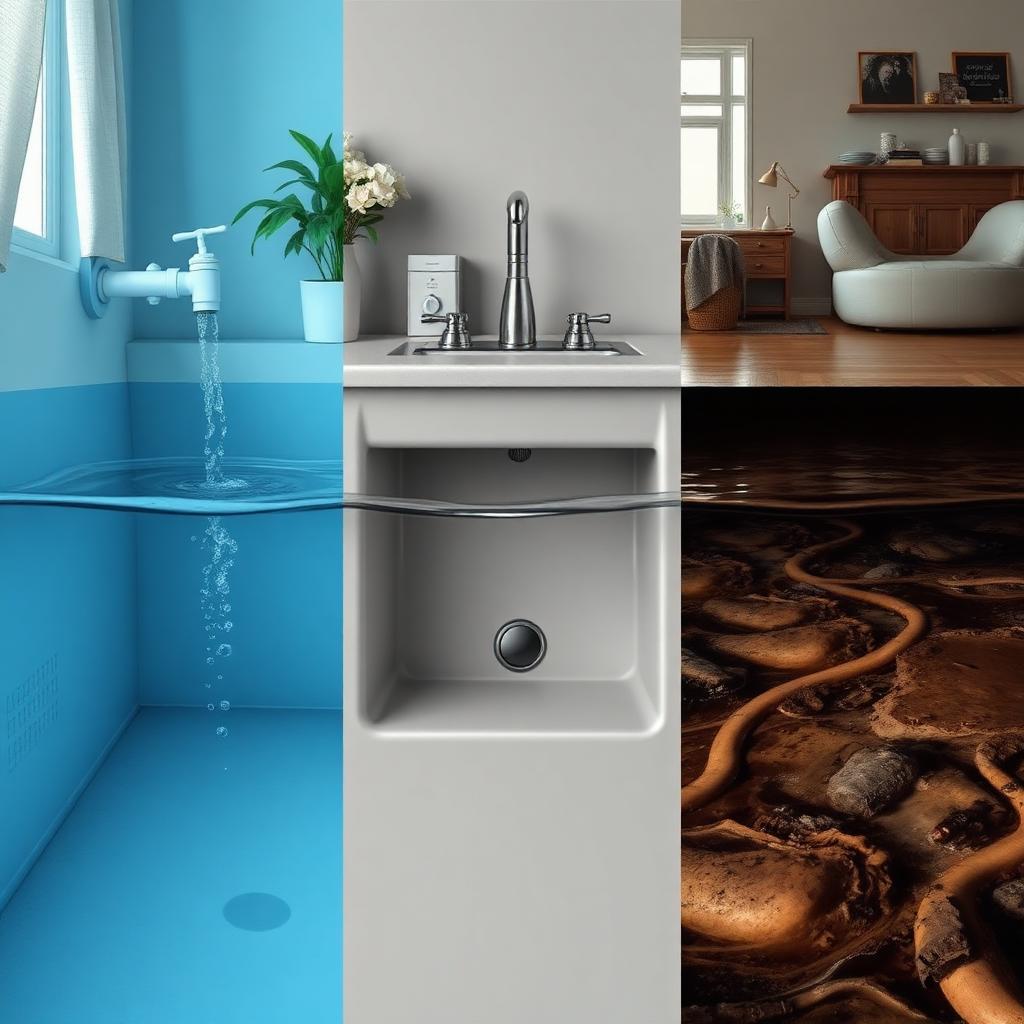
Category 1, 2, or 3 Water Damage: What's the Difference?
Water damage category drives every remediation decision and insurance conversation.
Why the category matters
Category determines what materials can be salvaged, how expensive the mitigation is, and how your insurer treats the claim.
Category 1: Clean water
Source: supply line failures, water heater leaks, sink or tub overflows. Treatment: extraction and drying only. Cost: $1,500-$4,500. Insurance: almost always covered. Time window: stays Cat 1 for only 24-48 hours before biological growth pushes it to Cat 2.
Category 2: Gray water
Source: dishwasher discharge, washing machine backflow, HVAC condensate, sump pump failure. Treatment: extraction, drying, plus antimicrobial. Porous materials usually removed. Cost: $3,000-$8,000. Insurance: covered when the underlying cause is a covered peril. Sump pump failures may need a separate endorsement. Time window: becomes Cat 3 in 48-72 hours.
Category 3: Black water
Source: sewage backup, toilet overflow past the trap, storm water intrusion, flood water. Treatment: aggressive removal of porous materials, antimicrobial and antifungal treatment, HEPA air scrubbing. Cost: $7,000-$25,000+. Insurance: sewer/water backup requires a specific endorsement. Flood water requires flood insurance. Full PPE required.
What speeds up degradation
Temperature above 70F. Time. Contact with contaminated materials. Presence of nutrients (drywall paper, carpet padding, wood).
The takeaway
Category 1 in the first 24 hours means most finishes get saved. Wait a week and you're paying for a full demo and rebuild.